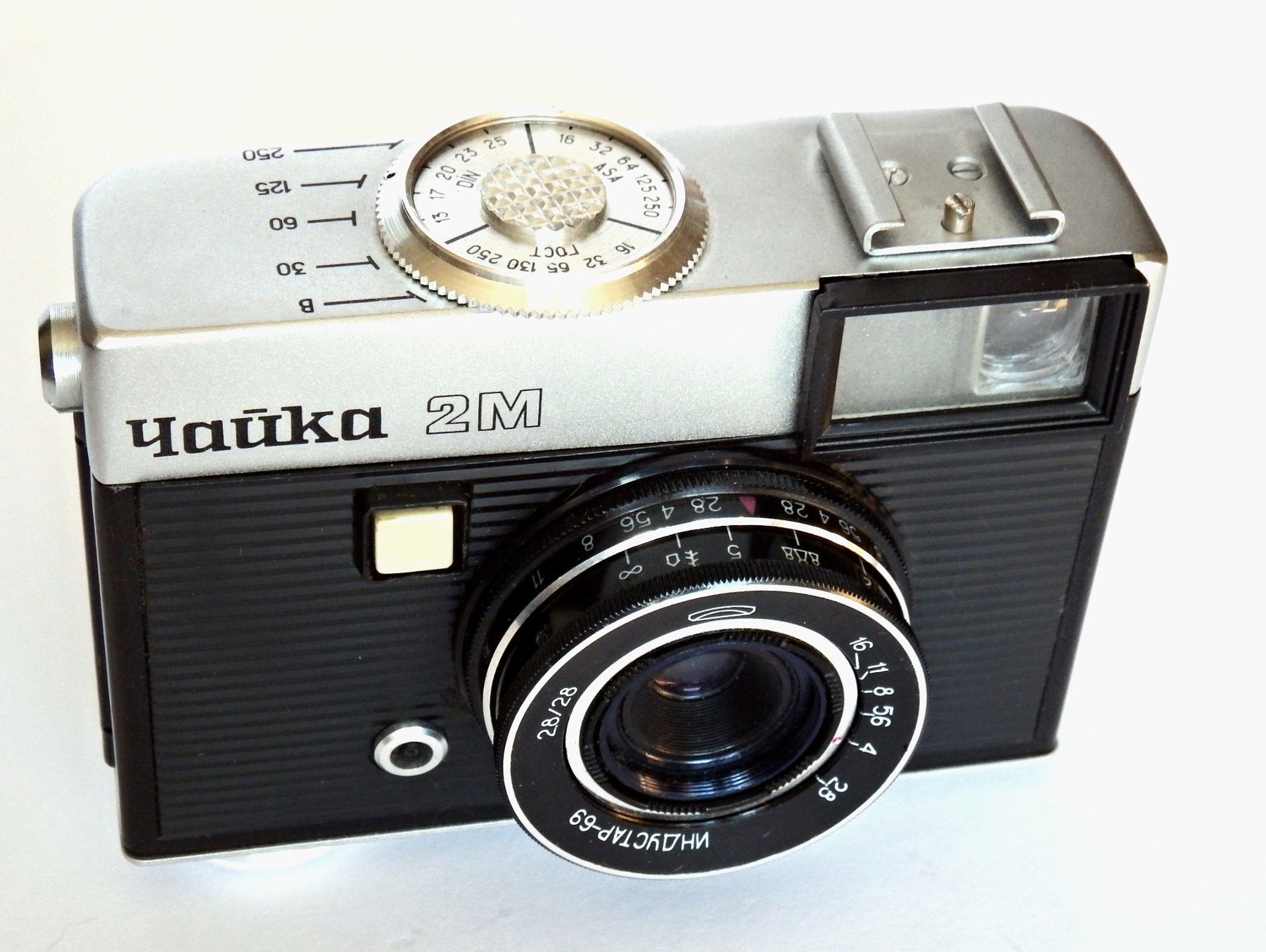

The Chaika looks tempting because the Pentax 17 made half-frame film feel current again. Both cameras promise more photographs per roll and a smaller, more casual way of shooting 35mm. But the similarity is mostly cultural, not practical.
The Pentax 17 is a new camera built around a controlled, beginner-friendly half-frame workflow: 35mm film, a 17 x 24mm frame, a 25mm f/3.5 lens that behaves like a 37mm equivalent, automatic exposure behavior, close-focus markings, and modern support. It is expensive compared with old film compacts, but the price is partly paying for predictability.
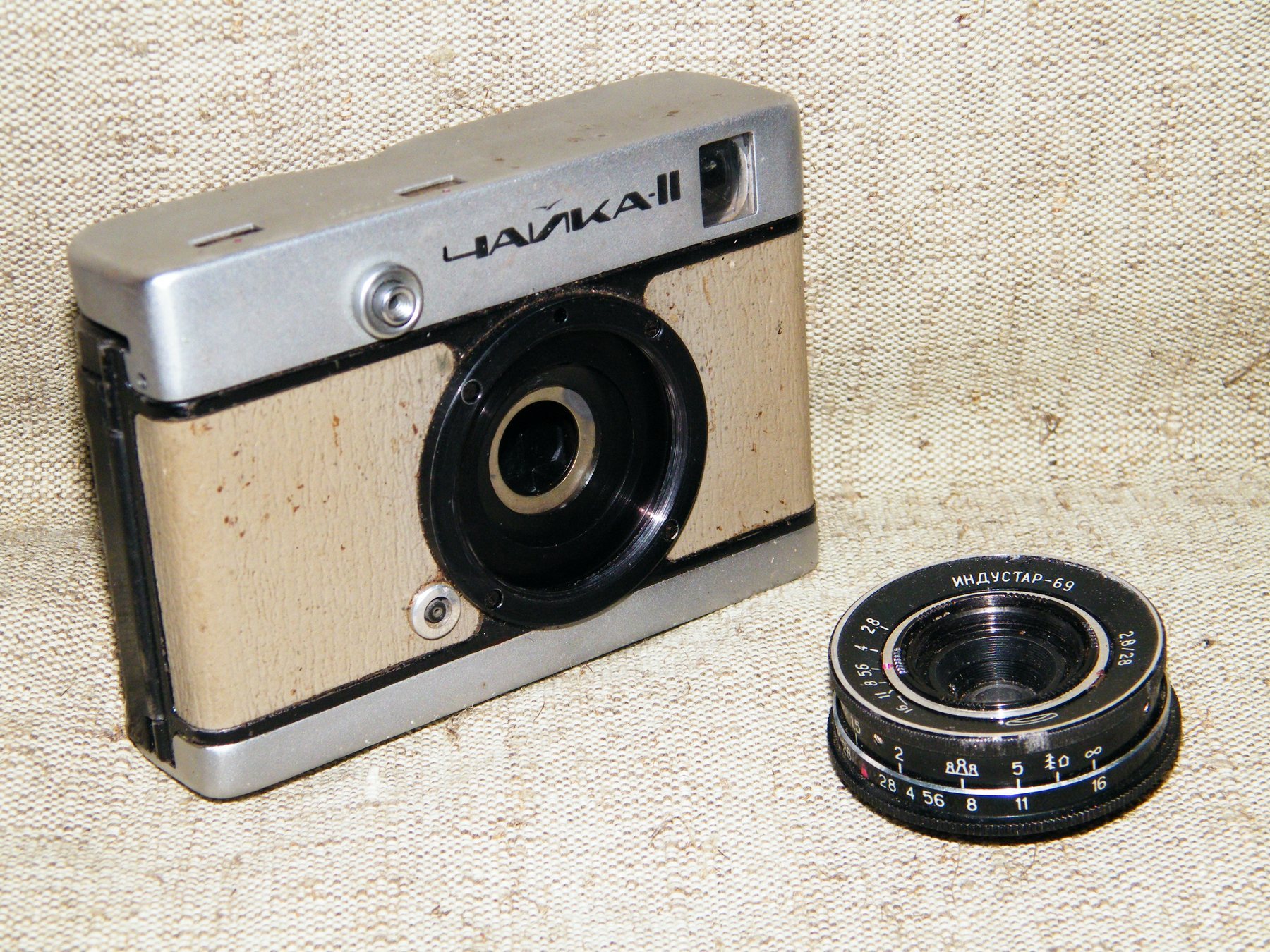
The Chaika family is a very different object. Camera-wiki documents it as a Soviet half-frame line from the BelOMO/MMZ ecosystem, built around the 18 x 24mm half-frame format. The best-known models, including the Chajka-II and Chaika-2M, typically use an Industar-69 28mm f/2.8 lens and simple mechanical shutter speeds rather than modern automation.
That makes the Chaika interesting, not equivalent. It gives you the half-frame rhythm: roughly twice as many exposures per roll, natural vertical sequencing, and less pressure on each frame. What it does not give you is the Pentax 17's new-camera reliability, meter integration, parts confidence, or factory support.
The serious buying question is not whether the Chaika is a cheap Pentax 17. It is whether you want a small Soviet half-frame camera with all the friction that implies. If the answer is yes, the Chaika can be a genuinely rewarding budget camera. If you simply want to shoot film without fighting the tool, it is the wrong bargain.
What the Chaika actually gives you
The attraction is simple: a small 35mm camera, half-frame economy, a real glass lens, and a tactile shooting process that feels far from disposable. The Industar-69 is part of the appeal because it is not clinically modern. It can give a picture a slightly uneven, old-compact character that suits diary work, street fragments and travel notes.
The 28mm lens on the 18 x 24mm half-frame format lands in a normal-to-slightly-wide field of view rather than a dramatic wide-angle look. That makes the Chaika useful for daily scenes and people in context, but less useful if you expect the broad 28mm full-frame perspective associated with a Ricoh GR.
The half-frame workflow is also the real reason to care. A 36-exposure roll can become roughly 72 frames, and the vertical default encourages pairs, sequences and small visual essays. That is why the Chaika fits this section: its value is not only cheapness, but a different photographic rhythm.

What you give up against the Pentax 17
The Pentax 17 is designed to remove friction. It has a modern exposure system, current production tolerances, an official manual, service path, and a body made for people returning to film in the 2020s. That matters because film and processing are now expensive; a faulty camera wastes real money.
The Chaika gives up that safety. The common problems are not theoretical: sticky shutters, light leaks, inaccurate focus, hazy lenses, missing take-up spools, worn seals, and meters that do not exist in the first place. Every used listing has to be treated as an individual mechanical object, not as a model name.
This is the central distinction: the Pentax 17 is a camera you buy to shoot. The Chaika is a camera you buy to inspect, test, maybe service, and then shoot if it behaves.
Buying checklist
Ask for recent sample frames, not just photos of the camera. The frames should show even spacing, no heavy leaks, and focus that looks credible at near and medium distances. If the seller cannot show test shots, price the camera as untested.
Check that the lens is clean, the aperture moves, the shutter fires at every speed, the film advance is not slipping, and the rewind/transport parts are present. On half-frame cameras, spacing problems can ruin an entire roll quickly.
Do not overpay for nostalgia. A cheap serviced Chaika is interesting. An expensive untested Chaika is usually worse value than saving for the Pentax 17 or buying a more common Japanese half-frame camera.
Verdict
The Chaika is a credible budget half-frame camera, but only for the right photographer. It is best for people who enjoy mechanical cameras, accept inconsistency, and want a rougher visual signature than the clean Pentax experience.
For first-time film users, the Pentax 17 is the better recommendation. For tinkerers, students and photographers who want a cheap camera with a story, the Chaika is the more interesting one.
Sources cited in this article
For "Budget Pentax 17 Alternative: Is the Chaika Half-Frame Camera Worth It?," these sources support the value comparison, used-market caution, and camera-history context.
- Camera-wiki: Chajka half-frame cameras camera-wiki.org
- Camera-wiki: Chajka-II specifications camera-wiki.org
- Ricoh Imaging: Pentax 17 launch announcement us.ricoh-imaging.com
- Wikimedia Commons: Chaika 2M image commons.wikimedia.org
- Wikimedia Commons: Chaika 2 image commons.wikimedia.org
Budget and alternative cameras
Older compacts, half-frame film, sleeper bodies and realistic alternatives where condition and price matter as much as specs.
- Budget Ricoh GR III Alternatives: What Actually Comes Close Budget Cameras
- Cheap Cyber-shot and Coolpix Compacts Are Back Camera News
- Sony RX100 VIII Status Check 2026: The Camera We Still Have Not Seen Camera News
- Canon PowerShot G7 X Mark III in 2026: Still Useful, No Longer Obvious Camera News
- Yongnuo YN455: Android, Micro Four Thirds and a Camera That Arrived Too Early Camera News