
The Canon PowerShot V1 is what happens when the compact camera stops trying to be a pocket stills camera and starts trying to be the main camera for a solo creator.
Canon's PowerShot V1 is not a nostalgic revival. It is a response to a very current problem: people want better video, better handling, better audio options and more reliable output than a phone, but they do not always want to build a mirrorless kit.
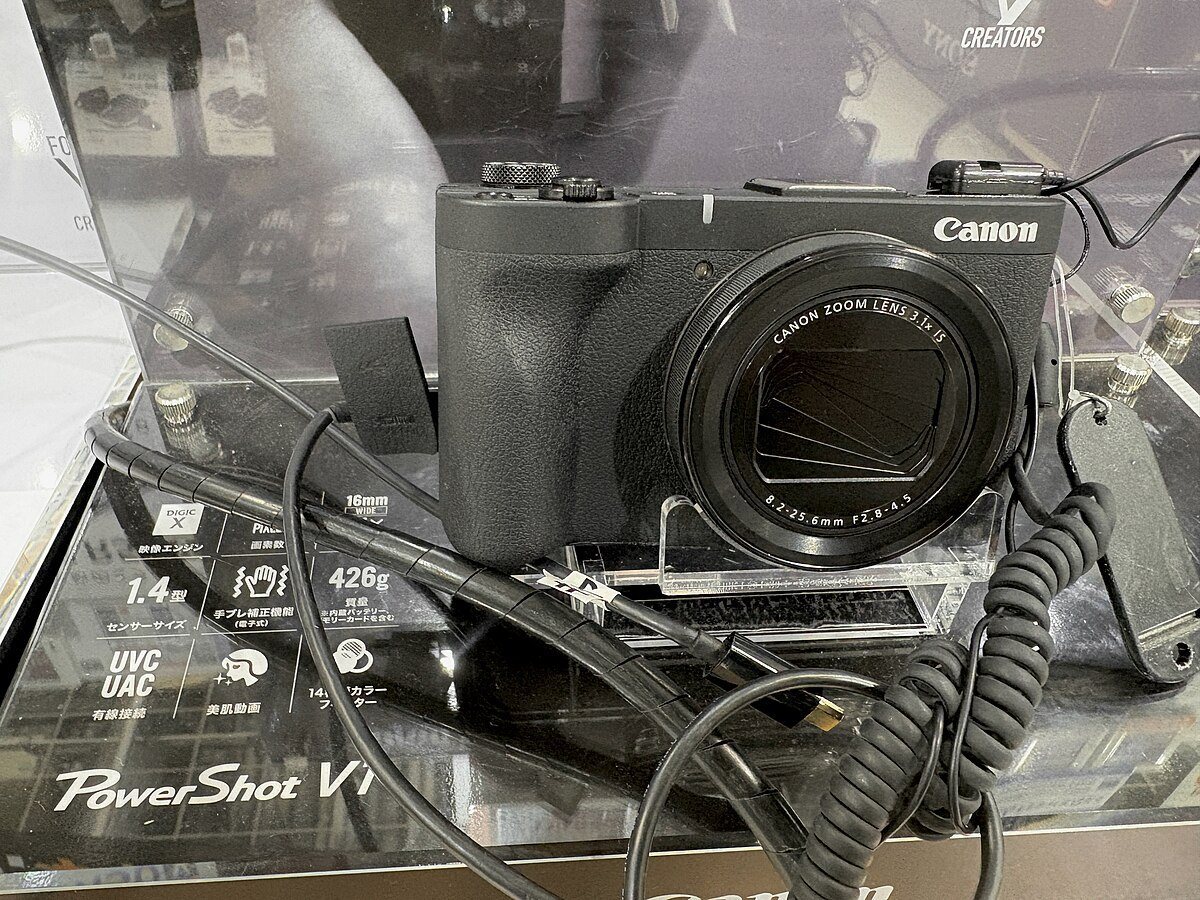
The V1 uses a 1.4-type 22.3MP sensor, a fixed 16-50mm equivalent lens for stills, optical stabilization, Dual Pixel CMOS AF II for PowerShot, 4K recording options, Canon Log 3, a built-in cooling fan and a body shape that clearly prioritizes creators who shoot themselves, travel light and publish quickly.
The camera is easy to misunderstand. If you expected a classic G7 X Mark III successor with a longer zoom and a photography-first identity, the V1 may feel strange. If you expected a compact video camera that can also shoot good stills, it makes much more sense.
In 2026, that distinction matters. The compact-camera market is being rebuilt by creators, not only by photographers. The V1 is one of Canon's most direct attempts to serve that audience without forcing them into interchangeable lenses.
Design and purpose
The V1 looks compact, but its purpose is not the same as older pocket cameras. The wide 16mm-equivalent starting point is a clue: Canon is thinking about arm's-length video, interiors, travel, walking shots and creators who need themselves and the environment in frame.
The built-in fan is another clue. Traditional compact cameras were judged by pocketability and zoom range. The V1 is judged by whether it can keep recording without becoming unreliable. That is a video-first priority.
This does not make the camera bad for stills. It means stills are part of a broader content workflow. The V1 is for people who move between photos, clips, vertical delivery, streaming and travel documentation.
Sensor and lens
The 1.4-type sensor is the heart of the V1. It is larger than the one-inch sensors used in many compact cameras, but smaller than APS-C. That gives Canon room to improve image quality over traditional pocket compacts while keeping the body and fixed lens manageable.
The 16-50mm equivalent stills range is a deliberate compromise. It is excellent for self-recording, travel, interiors, casual documentary work and environmental portraits. It is less satisfying for distant subjects, compressed portraits, stage photography or wildlife. If you need reach, this is not the right compact.
The f/2.8-4.5 aperture is reasonable for the size and range, but it will not replace a fast prime on a larger sensor. The camera depends on stabilization, sensor size, autofocus and Canon processing to make the package work.
Image quality
For stills, the V1 should be judged as a compact with a larger-than-usual sensor, not as a mirrorless replacement. It can produce strong travel photos, portraits with context, food images, product details and everyday documentary frames. It is not built for heavy cropping or shallow-depth-of-field obsession.
Canon color is a major advantage for the target audience. Many V1 users will work with JPEGs, quick edits and direct publishing. Pleasant skin tone, stable white balance and files that do not require rescue in post matter more than theoretical maximum dynamic range.
RAW support remains important for photographers who want more control. The V1 is not only a vlogging camera. It can serve as a daily stills compact if the user accepts the limited focal range.
Autofocus and stabilization
Dual Pixel CMOS AF II for PowerShot is the camera's safety feature. Creator cameras live or die by whether they keep the face sharp while the operator is also the subject. Canon understands that problem well.
For stills, subject detection helps with people, casual action, pets and everyday movement. For video, it reduces the need for constant focus checks on a small screen. It will not replace careful technique, but it makes one-person production much easier.
Optical stabilization is important because the V1 encourages handheld use. The camera will still benefit from a small grip, tripod or gimbal for walking footage, but stabilization makes casual clips and low-light stills more practical.
Video workflow
The V1's video feature set is the reason to buy it over a conventional compact. 4K recording, Canon Log 3, a cooling fan, creator-friendly framing and easy operation create a small camera that can handle longer sessions better than many pocket-first designs.
Canon Log 3 gives more grading flexibility, but it also assumes the user understands exposure and color. For fast social publishing, standard color profiles may be more practical. For controlled work, Log 3 gives the V1 a more serious ceiling.
The main limitation is lens flexibility. A fixed 16-50mm equivalent lens works beautifully for many creator jobs, but it cannot become a telephoto interview lens or a specialty optic. The buyer needs to know whether simplicity is a feature or a restriction.
Ergonomics and real use
The V1 is most convincing when kept simple: camera, small grip, compact microphone, spare battery, SD cards and maybe a travel tripod. Once the rig becomes too large, an interchangeable-lens body starts to make more sense.
The absence of an eye-level viewfinder will bother traditional photographers. The flip-screen workflow is appropriate for video, but less satisfying for bright-day stills. Again, the camera is telling you who it is for.
Battery and heat planning still matter. A built-in fan helps, but creators shooting events, travel days or long teaching sessions should carry power and cards. Small cameras do not remove production logistics; they only reduce them.
Competition
The obvious competitors are Sony's ZV-1 series, the older Canon G7 X Mark III, compact mirrorless kits, the Ricoh GR IV and high-end smartphones. The V1 beats phones in handling, optical zoom, sensor size and dedicated capture feel. It beats older compacts in video intent. It loses to mirrorless cameras in lens choice and to the GR IV in pure stills discipline.
Compared with Sony's creator compacts, Canon's color and Dual Pixel AF will attract users who want an easier path to good-looking people footage. Sony's ecosystem and mature creator tools remain strong. The choice depends on whether you prefer Canon's rendering and interface or Sony's video compact lineage.
The V1 is not the best compact camera for everyone. It is one of the clearest compact cameras for a specific kind of modern creator.
Verdict
The Canon PowerShot V1 is a strong 2026 creator compact because it understands the job: wide lens, better-than-phone sensor, reliable autofocus, 4K options, cooling and a simple fixed-lens workflow.
Buy it if you make travel videos, educational content, casual documentaries, social clips, livestreams or one-person productions and want a dedicated camera without a lens system. Skip it if you want a viewfinder, long zoom, maximum stills control or the rendering of a larger sensor with fast primes.
The V1 is not Canon returning to the old compact camera market. It is Canon building for the market that replaced it.
Sources cited in this article
For "Canon PowerShot V1 Analysis 2026: A Compact Camera Built for Creators," these sources document the specifications, product material, and market context used for the source-based review judgment. The page should not be read as a lab-test claim unless it explicitly says hands-on testing was performed.
- Canon USA: PowerShot V1 announcement usa.canon.com
- Wikimedia Commons: Canon PowerShot V1 image commons.wikimedia.org
Compact-camera revival
Pocket cameras, creator compacts, Ricoh GR discipline, RX100 demand, and the reason small dedicated cameras still matter.
- Compact Cameras in 2026: Why Small Cameras Came Back Camera News
- Best Compact Cameras in 2026: G7 X Mark III, PowerShot V1, RX100 VII or Ricoh GR? Camera News
- Camera Grand Prix 2026: What the Winners Say About Cameras Now Camera News
- Canon PowerShot G7 X Mark III in 2026: Still Useful, No Longer Obvious Camera News
- Ricoh GR IV Analysis 2026: The Snapshot Camera Gets Sharper Reviews