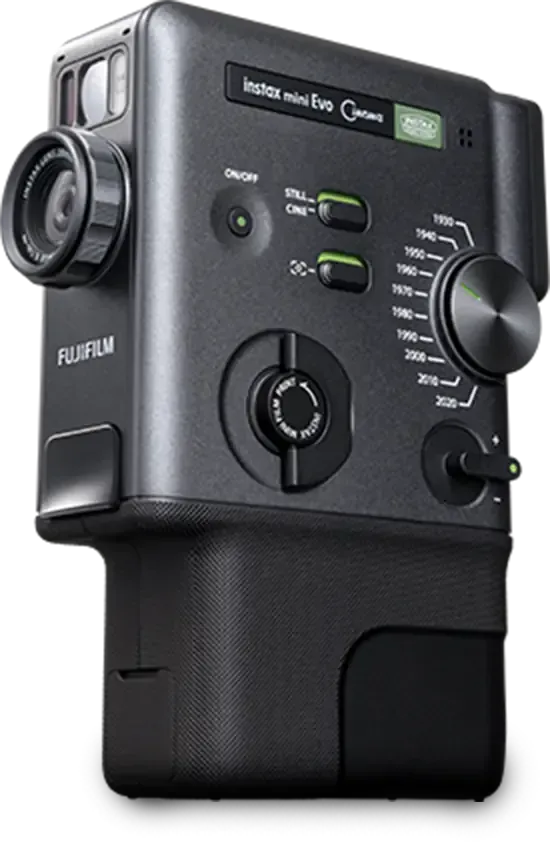
The instax mini Evo Cinema is not a camera for photographers who want maximum image quality. It is a camera for people who want image-making to become physical, social and a little theatrical again.
Fujifilm's instax line has always understood something the broader camera industry sometimes forgets: image quality is not the only reason people take pictures. People take pictures to remember, decorate, give, flirt, joke, archive, perform, collect and share. The mini Evo Cinema builds on that instinct with a hybrid instant camera that shoots stills, records short video clips, prints instax mini photographs and links video playback through QR codes.
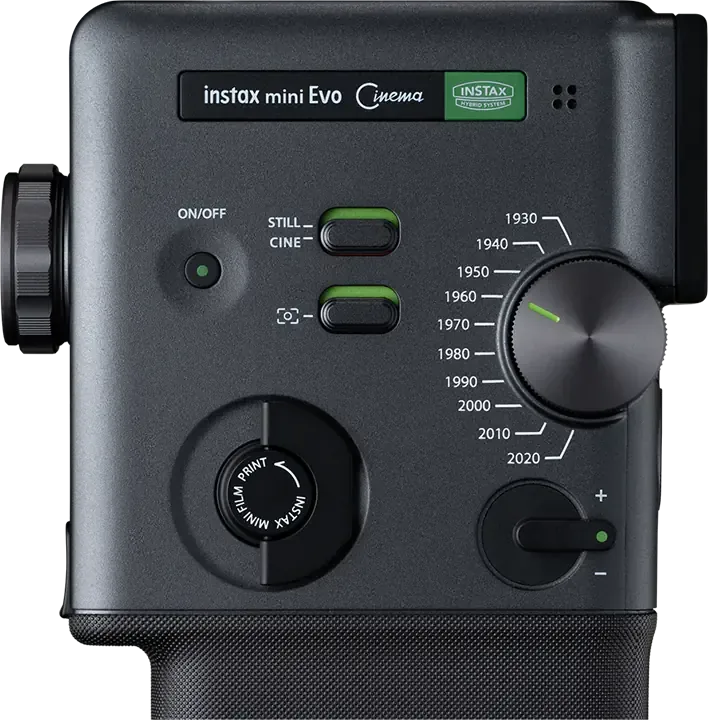
The camera's 2026 identity is explicitly cinematic. It uses a retro movie-camera styling language, a Gen Dial for era-inspired looks, Degree Control for effect strength, a Frame Switch, a print lever and app integration. It is closer to a creative object than a conventional compact.
That makes it easy to dismiss from a technical standpoint. The sensor is small, the prints are small, the files are not for serious editing, and the video feature is about memory rather than filmmaking. But dismissing it only by technical standards misses the point.
The mini Evo Cinema is interesting because it turns photography into an event. You do not just take a file. You choose a look, print a frame, hand it to someone, and possibly attach a moving memory to the print. In a camera culture obsessed with computational perfection, that physical loop feels surprisingly fresh.
What kind of camera is this?
The mini Evo Cinema is a hybrid instant camera, but that phrase undersells it. It is part camera, part printer, part prop and part social device. It borrows the ritual of instant film while using digital capture and app connectivity to keep the process flexible.
That hybrid structure gives it a different value from analog instax cameras. With a purely analog instax body, every exposure becomes a print. With the mini Evo Cinema, the user can shoot, review, choose, print and reprint. That reduces waste and makes the camera friendlier for people who like instant prints but not instant mistakes.
The Cinema version adds the video layer. The print can become a physical index for a short clip through a QR code. That is not cinema in a professional sense, but it is a smart social idea: a photograph becomes a doorway to a moving memory.
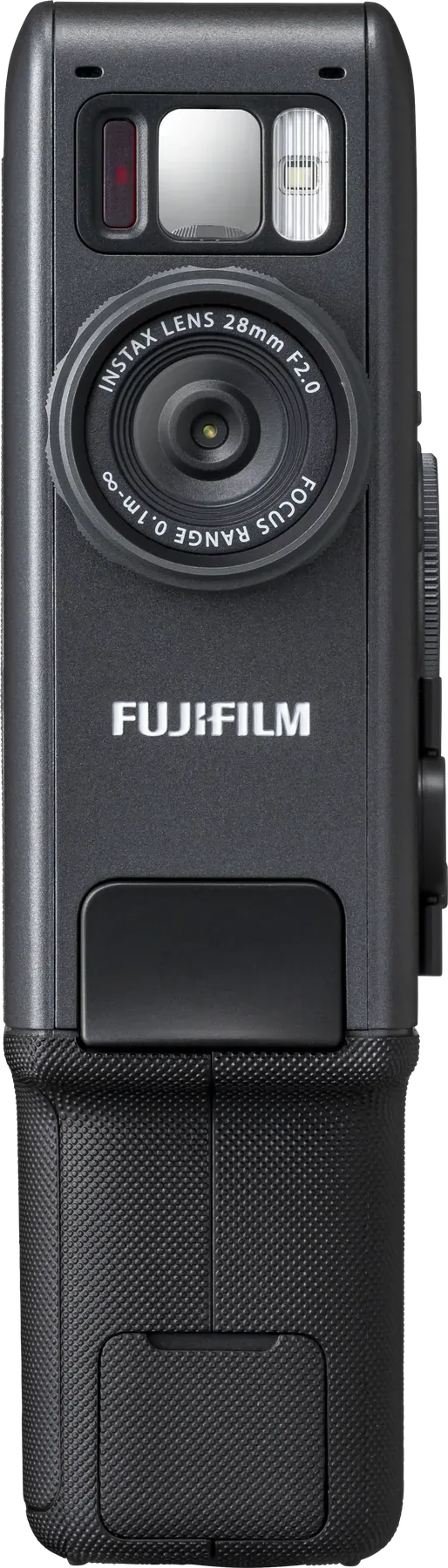
Image quality
Image quality should be judged against the instax purpose. The mini Evo Cinema is not trying to produce files for large prints, aggressive edits or client delivery. It is trying to make small physical photographs that feel charming, immediate and personal.
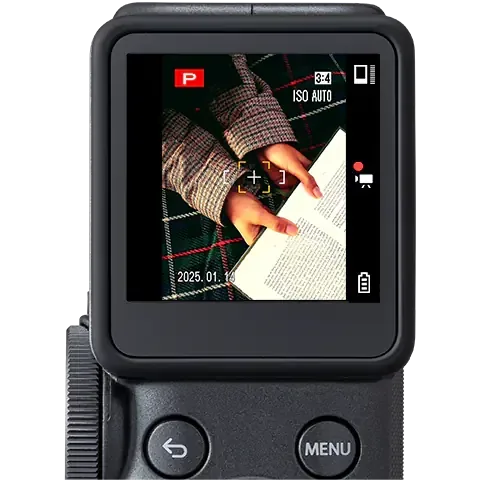
The digital-to-instant workflow changes the experience. Because you can choose what to print, the hit rate is better than with analog instant cameras. You can avoid closed eyes, missed framing and accidental exposures before spending film.
The downside is that the image can feel more processed and less unpredictable than a purely analog instant camera. Some users will prefer the control. Others will miss the risk. That tension is central to the product.
Effects and creative control
The camera's creative system is built around looks rather than technical capture settings. The Gen Dial, era-inspired effects, Degree Control and Frame Switch encourage the user to decide how the memory should feel before printing it.
This is not a replacement for Lightroom, Capture One or a serious color pipeline. It is closer to in-camera play. That is appropriate for the audience. The best instax images are not usually perfect; they are specific, tactile and emotionally direct.
The danger is overuse. Strong effects can become decoration. The best use is selective: one look for a night out, a softer look for travel, a higher-contrast effect for graphic scenes, a frame treatment when the print is meant as an object.
Video prints
The video feature is the most modern part of the camera. A short clip can be connected to a printed photograph through a QR code. That means the print is not only a final object; it can also become a physical bookmark for a moving moment.
For family memories, travel, parties and gifts, this is genuinely clever. A print from a birthday, wedding table, road trip or concert can carry a little motion without forcing the photograph to stop being a photograph.
It is not a filmmaker's tool. There is no reason to compare this feature with a Nikon ZR or Canon R6 Mark III. It is about memory and sharing, not cinematic image control.
Ergonomics and social use
The mini Evo Cinema is designed to be handled in public. The print lever is performative in a good way. Pulling it gives the device a ritual that phones lack. That ritual is why instant cameras survive.
The camera is also a conversation object. At a party, a phone disappears into private scrolling. An instax print moves from hand to hand. That social movement is a real feature, even if it never appears in a technical chart.
The limitation is speed and cost. Instax film is not free, prints take time, and the camera is bulkier than a phone. Users who enjoy that friction will love it. Users who want maximum convenience will not.
App and workflow
App integration gives the camera a practical advantage: smartphone printing, transfers and connected sharing make it more flexible than a purely analog instant body. It can act as both a camera and a small printer within a casual visual workflow.
The microSD and USB-C support help the device feel current, but the camera should not be confused with an archival digital camera. The long-term value is the print and the memory, not the file quality.
That is fine. Not every camera needs to be a production camera. Some cameras are for keeping a night from disappearing into a phone gallery.
Competition
The closest alternatives are the standard instax mini Evo, the instax mini 99, a smartphone plus mini printer, Polaroid instant cameras and cheaper analog instax bodies. Each gives a different balance of control, unpredictability, print cost and object appeal.
Compared with the standard mini Evo, the Cinema model adds a stronger concept and the video-print idea. Compared with analog instax, it gives more control and less waste. Compared with a phone and printer, it feels more like a camera and less like an accessory workflow.
For serious photographers, that may still not be enough. But for visual diarists and social users, the mini Evo Cinema has a stronger identity than many technically superior devices.
Verdict
The Fujifilm instax mini Evo Cinema is not a technically great camera in the conventional sense. It is a very good image object. That distinction matters.
Buy it if you want instant prints, playful looks, short video memories, social photography and a camera that makes people interact with images physically. Skip it if you want high-resolution files, serious low-light performance, manual control depth or video that can be graded and edited professionally.
The mini Evo Cinema is a reminder that photography is not only capture. Sometimes it is the moment when a print appears and everyone leans in.
Sources cited in this article
For "Fujifilm instax mini Evo Cinema Analysis 2026: The Instant Camera Becomes a Toy Cinema," these sources document the specifications, product material, and market context used for the source-based review judgment. The page should not be read as a lab-test claim unless it explicitly says hands-on testing was performed.
- instax: mini Evo Cinema product page instax.com
- Fujifilm: instax mini Evo Cinema announcement fujifilm.com