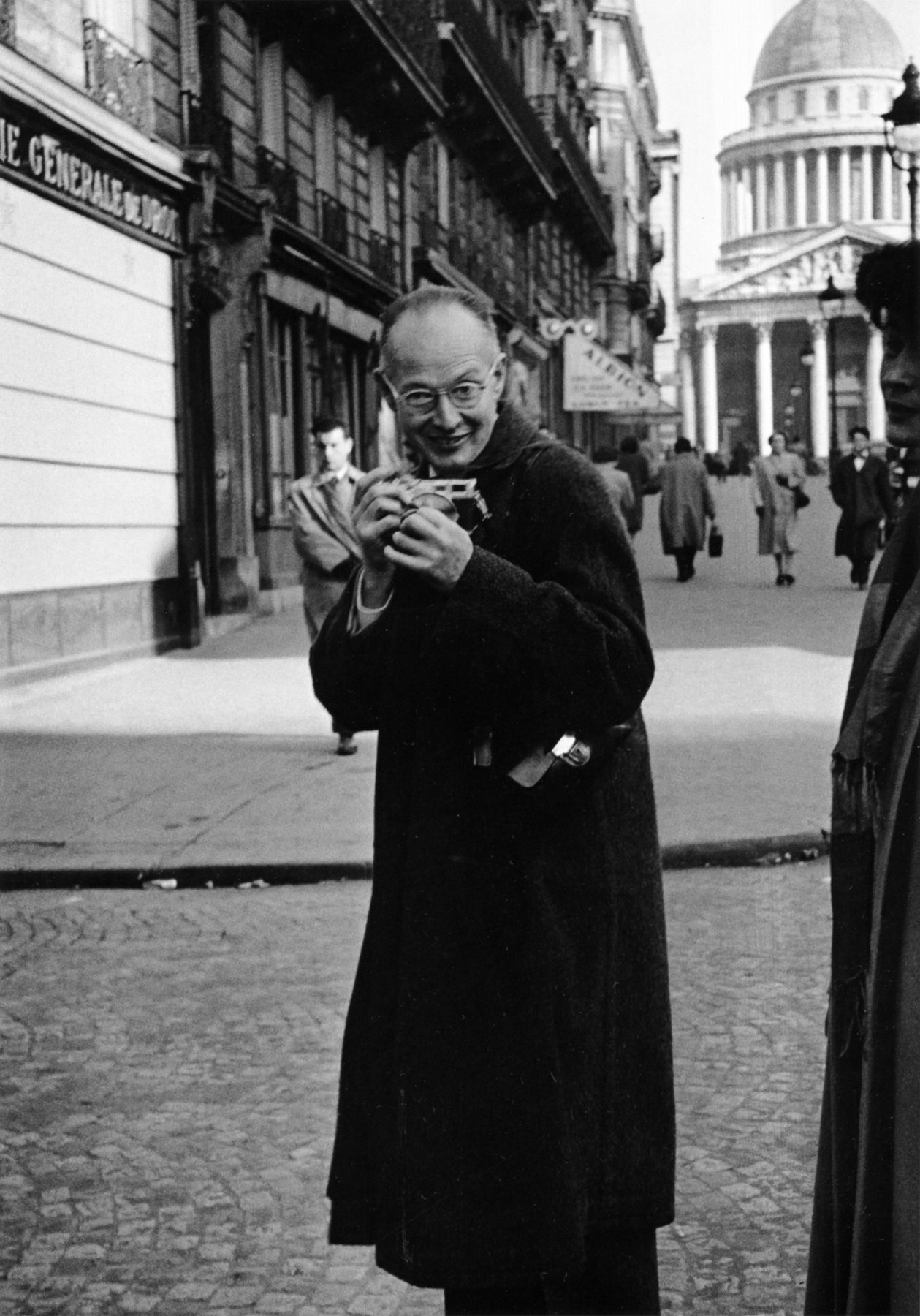
The older framing asked what Henri Cartier-Bresson would think of photography today. The honest answer is that we cannot know. We can, however, use his practice to sharpen our own standards.
Cartier-Bresson's biography is inseparable from walking, timing, geometry and historical presence. He moved through the 20th century with a camera in situations that demanded physical attention.
That lesson matters now because photographic surfaces circulate faster than their contexts. A convincing picture is not enough. Editors and viewers increasingly need to know where an image came from, who made it and what kind of encounter it records.
The decisive moment should not be reduced to a slogan. It is a discipline of timing and presence: the photographer meeting the world under specific conditions and accepting the consequences of that encounter.
The decisive moment after infinite images
The decisive moment is often misunderstood as fast reflex. It is better understood as alignment: body, scene, geometry and time coming together.
In a digital culture saturated with images, that standard becomes more demanding. A photograph has to carry evidence of attention, not only the surface of a good composition.
What editors should ask now
Where was the image made? Who made it? What was generated, altered or staged? What context is missing?
Those questions are not bureaucratic. They are now central to photographic literacy.
The decisive moment survives as editing pressure
In the digital age, the decisive moment is no longer protected by scarcity. Burst shooting, phone capture and AI-assisted selection can produce too many possible frames, which makes the final edit more important rather than less.
Cartier-Bresson's idea remains useful if it is treated as responsibility, not mythology. The photographer still has to decide when form, gesture, distance and meaning briefly align enough to stop making more pictures.
Sources cited in this article
For "Cartier-Bresson and the Decisive Moment in the Digital Age," these sources ground the cultural argument in public records, archives, exhibitions, project material, or reporting.
- Fondation Henri Cartier-Bresson: biography henricartierbresson.org
- U.S. Copyright Office: Copyright and Artificial Intelligence copyright.gov
Photography history and visual literacy
Photobooks, archives, photographer voices, exhibitions and the older ideas that still shape how cameras are used.
- Anna Atkins: The Photographer Who Made the First Photo Book in Blue Inspiration
- Sergio Larrain's Letter to a Young Photographer: Walk First, Photograph Later Inspiration
- Photography Books for Visual Literacy in 2026 Inspiration
- MoMA New Photography 2025: Lines of Belonging After the Show Inspiration
- Perfect Days and the Compact Camera in 2026 Inspiration