Retail charts are not lab tests, but they expose a market fact: which cameras people actually put in carts when price, brand trust, stock and workflow all collide.
The cameras of the moment are not one single camera. B&H's best-seller sort leans toward full-frame mirrorless bodies bought by enthusiasts and working shooters, while Amazon's reported mirrorless chart leans toward beginner kits and creator-friendly cameras. Put those signals together and the market splits into clear lanes: premium full-frame, practical hybrid, beginner APS-C, creator/vlogging and pocket-camera nostalgia.
As of this May 2026 check, B&H's mirrorless category sorted by Best Sellers surfaces cameras such as the Canon EOS R5 Mark II, Sony a7R VI, Canon EOS R6 Mark II, Sony a7 IV, Sony a7 V, Canon EOS R6 Mark III, Nikon Z8, Sony a6700 and Canon EOS R50 near the visible top of the category. That is a strong pro and advanced-enthusiast signal.
Amazon's chart, as reported around the Big Spring Sale window, looked different: Canon EOS R50, Canon EOS R100, Fujifilm X-T30 III, Canon EOS R6 Mark II, Sony ZV-E10, Sony a6700, Sony a6400 and Sony A7 V all appeared in the buying conversation. That is the other half of the market: cameras people can justify as first real cameras, travel cameras, creator tools or upgrades from a phone.
The takeaway is not a rigid top ten. Bestseller lists move with discounts, stock, preorders, influencer attention and bundles. The value is hierarchy: the buyer who wants the best camera is not shopping the same list as the buyer who wants the first camera.
How to read retailer charts
A bestseller chart is informative, but it is not neutral. A discount can lift an older model. A new launch can create a preorder spike. A bundle can make one listing appear stronger than the body-only version. Stock problems can push a famous camera down simply because people cannot buy it.
That is why this guide treats B&H and Amazon as signals. B&H is especially revealing for system buyers because the category can be sorted by Best Sellers. Amazon captures beginner kits, creator bodies and impulse-friendly bundles that may not dominate specialist-camera discussion.
The overlap matters most. When a camera appears across these different shopping environments, it usually has a clear job: easy first camera, workhorse hybrid, high-resolution upgrade, compact travel tool or creator video body.
The B&H lane: premium mirrorless is hot
The specialist-retailer signal is clear: full-frame bodies still drive high-intent buying. Canon's EOS R5 Mark II and R6-series bodies, Sony's a7 line, Nikon's Z8 and strong APS-C options such as the Sony a6700 and Canon R50 all show why mirrorless has become the default buying path for enthusiasts and working photographers.
The most interesting model in the current conversation is the Sony a7R VI. It is expensive, high-resolution and early in its life cycle, yet it has already been reported as climbing bestseller lists quickly. That suggests buyers are still willing to pay for resolution when speed, autofocus and video no longer feel like sacrifices.
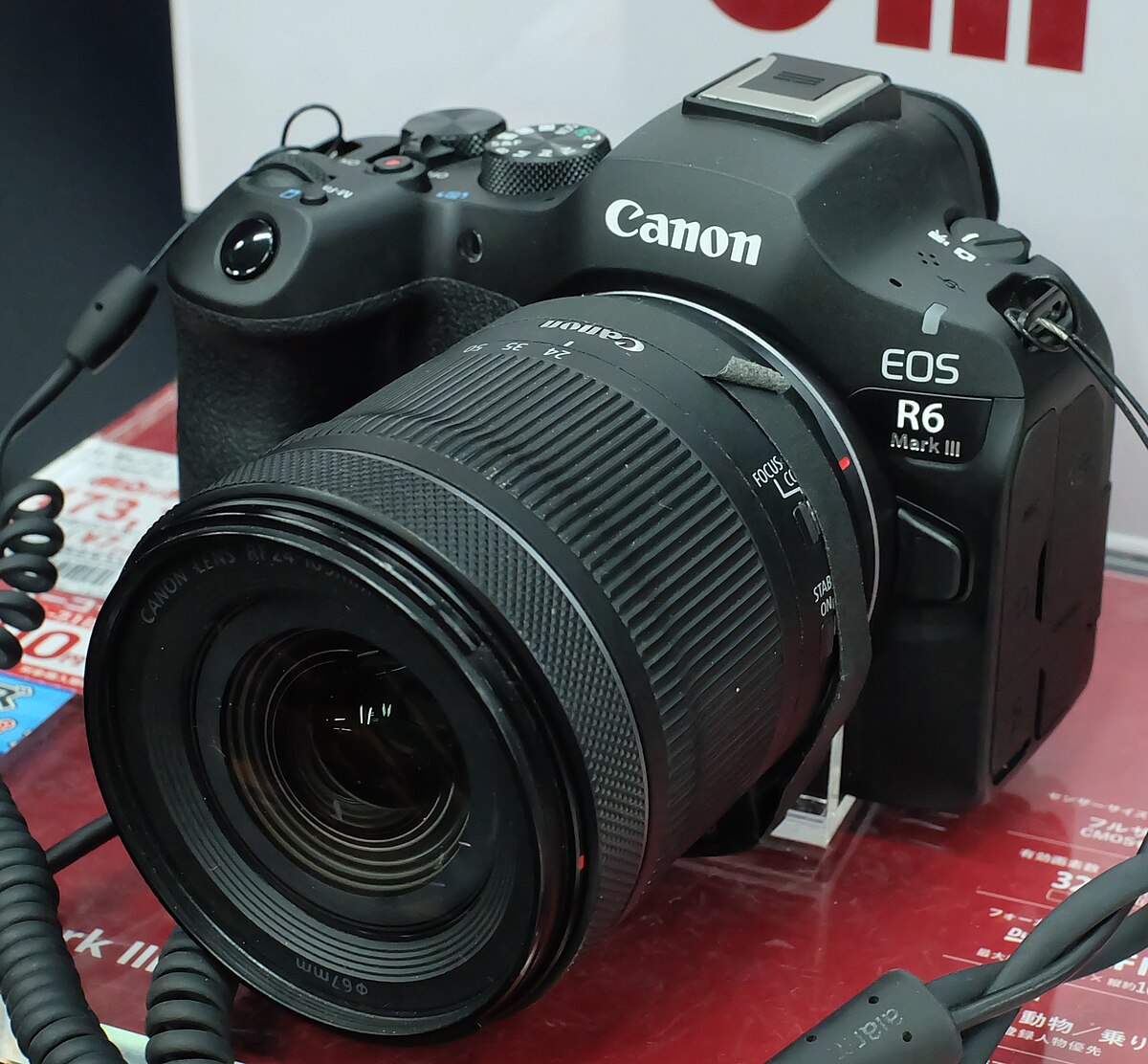
Canon's position is just as important. The R5 Mark II is the prestige hybrid, the R6 Mark II is the value workhorse, and the R6 Mark III pushes deeper into modern video. Those three cameras make Canon look unusually strong across the middle and upper part of the market.
The Amazon lane: first cameras and creator kits
Amazon's mirrorless chart tells a different story. Canon EOS R50 and R100 kits make sense because they are easy to understand: small body, kit zoom, modern autofocus and a price that feels closer to a phone upgrade than a professional system investment.
Sony's ZV-E10, a6400 and a6700 explain the creator side of the market. These cameras are not only bought by traditional photographers. They are bought by people making YouTube videos, TikToks, travel clips, product reels and family work where autofocus, flip screens, small lenses and simple audio matter.
Fujifilm's X-T30 III belongs to a third lane: compact, stylish, stills-friendly and emotionally closer to the retro-camera trend. Camera buying in 2026 is not only rational; people also want a tool that feels different from a phone.
The stand I would build
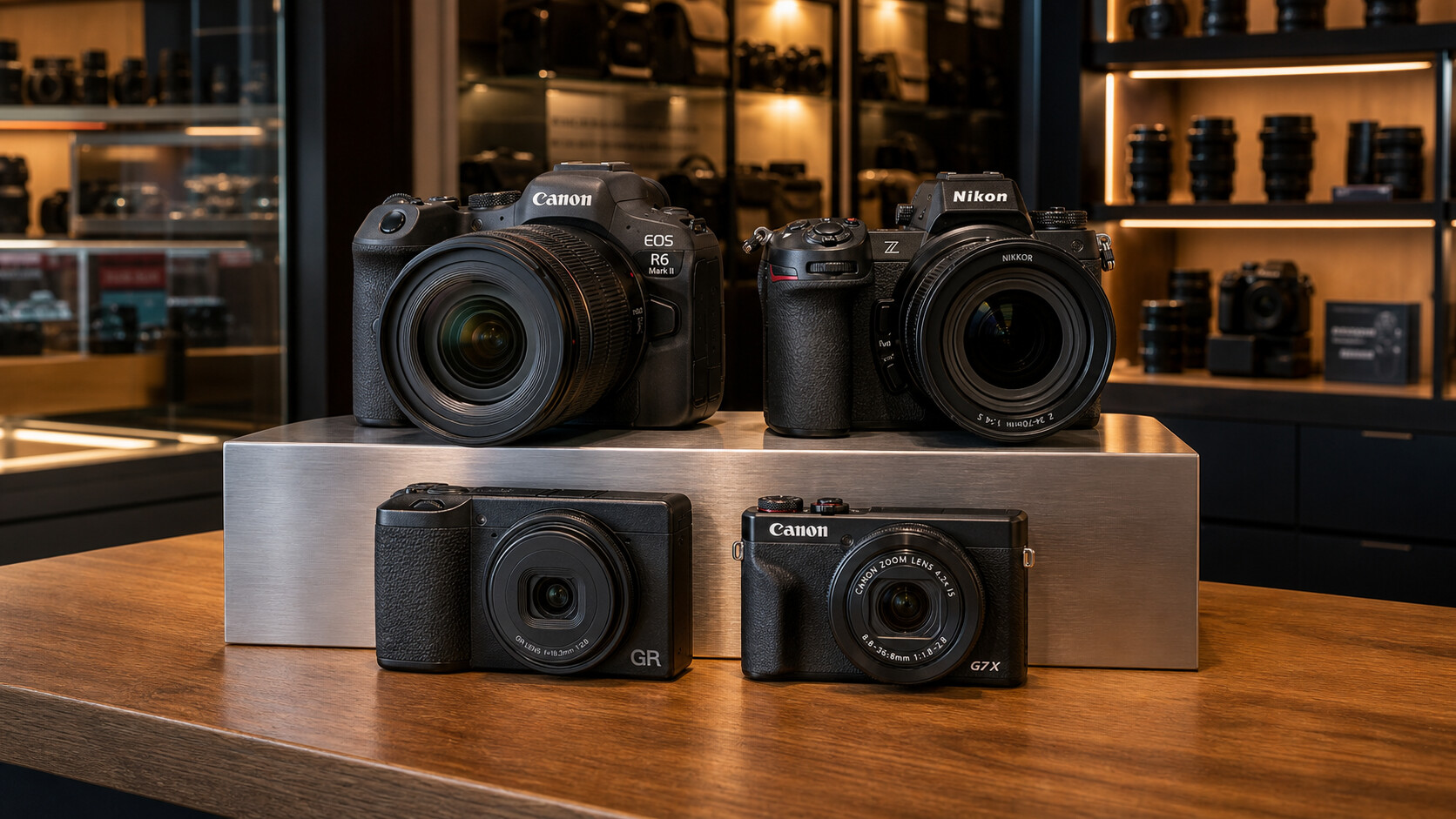
If this were a real store display, I would not arrange it by brand. I would arrange it by buyer. Top shelf: Canon EOS R5 Mark II, Sony a7R VI and Nikon Z8 for people who want resolution, speed and professional headroom. Middle shelf: Canon R6 Mark II, Canon R6 Mark III and Sony a7 V for hybrid shooters who need stills and video in one body.
The next shelf would be the practical APS-C shelf: Canon R50, Sony a6700, Sony a6400 and Fujifilm X-T30 III. This is where many first interchangeable-lens cameras should live. The value is smaller lenses, lower weight and enough image quality for real work.
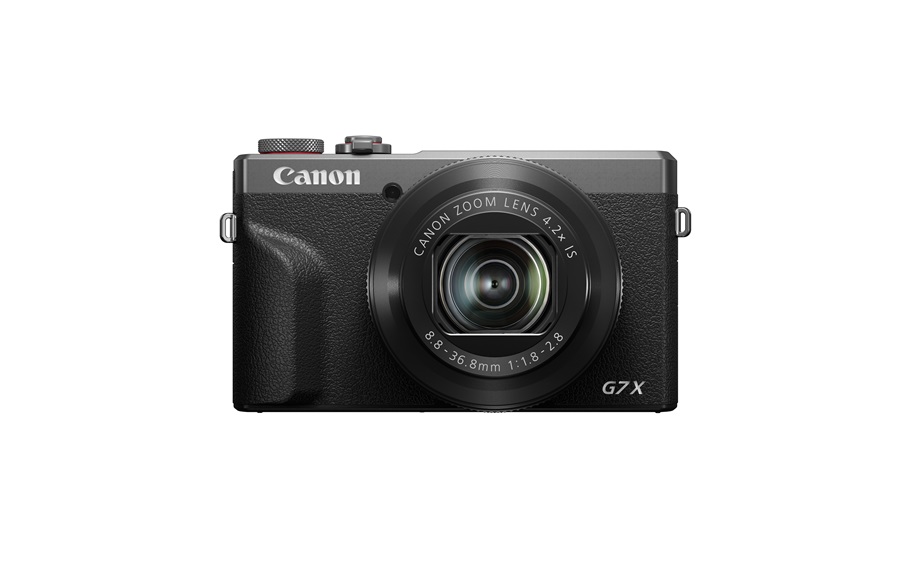
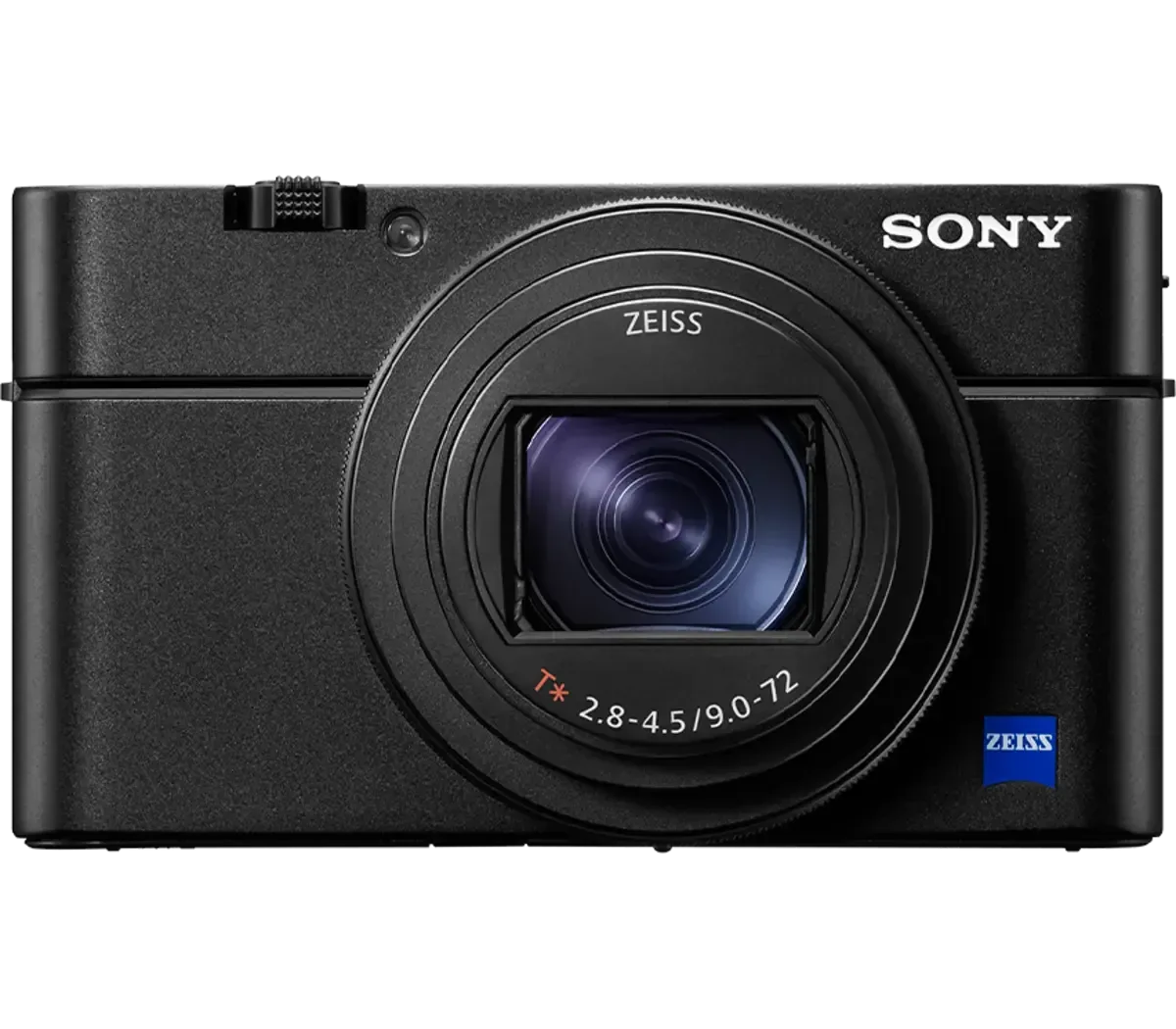
The creator shelf would include Sony ZV-E10-style bodies, compact vlogging cameras, action cameras and pocket gimbals. The compact shelf would include cameras such as the Canon G7 X Mark III, Sony RX100 line, Ricoh GR-style pocket cameras and the new wave of premium fixed-lens compacts. That shelf exists because people are tired of every picture feeling like a phone picture.
What I would actually buy
For a first real camera, the Canon EOS R50 is still the cleanest answer when the price is right. It is simple, modern and capable without demanding professional-system discipline from day one. If video is the priority, a Sony ZV-style kit is often the more natural fit.
For one reliable hybrid body, the Canon R6 Mark II or Sony a7 V class is the sweet spot. These cameras are bought because they solve normal work: portraits, weddings, travel, video clips, low light, family work and paid jobs that do not need extreme resolution.
For the best-camera shelf, I would choose based on system and output: Canon R5 Mark II for Canon hybrid shooters, Sony a7R VI for resolution-heavy Sony users, Nikon Z8 for photographers who want flagship behavior without the largest flagship body. None of these are casual purchases, but their presence near bestseller lists shows that committed buyers are still spending when the tool is clear.
The practical conclusion
The cameras people are buying in 2026 show a split market, not a dead market. Phone photography keeps improving, but camera buyers are not looking for another phone. They are looking for a tool with a better grip, a real lens, a viewfinder, better subject separation, stronger video controls, or simply a different relationship to making pictures.
That is why the best camera of the moment depends on the shelf you belong to. Beginner: Canon R50 or a similar APS-C kit. Creator: Sony ZV-style body or compact video camera. Hybrid worker: Canon R6 Mark II, Canon R6 Mark III or Sony a7 V. Resolution/pro: Canon R5 Mark II, Sony a7R VI or Nikon Z8. Pocket-camera buyer: do not ignore compacts, because the whole category is alive again.
The winning product is not one camera. It is the return of clearly differentiated cameras.
What the sales charts actually say
Amazon and B&H measure different buyer instincts. Amazon rewards recognizable kits, entry prices and creator-friendly bodies; B&H often reflects a more deliberate shopper who is comparing systems, lenses and professional use cases.
The sharper reading is not that the most purchased camera is automatically the best camera. It is that demand clusters around cameras that make the next step feel clear: better autofocus than a phone, a real lens mount, a familiar brand and a price that does not turn curiosity into a professional commitment.
Sources cited in this article
For "Best-Selling Cameras in 2026: What Amazon and B&H Buyers Are Really Choosing," these sources separate confirmed product information from editorial interpretation, market context, and buying-risk analysis.
- B&H Photo: Mirrorless Cameras sorted by Best Sellers bhphotovideo.com
- Digital Camera World: Amazon top 10 best-selling mirrorless cameras digitalcameraworld.com
- Digital Camera World: Sony A7R VI and current B&H/Amazon best-seller signals digitalcameraworld.com
Camera market and buying context
Retail demand, bestseller signals, APS-C systems, upgrade decisions and camera-company pressure beyond spec sheets.
- Camera Grand Prix 2026: What the Winners Say About Cameras Now Camera News
- Best APS-C Cameras in 2026: Practical Picks for Real Photographers Camera News
- APS-C Camera Systems in 2026: Lenses, Bodies and Real Value Camera News
- GoPro Strategic Review: Why the Action Camera Pioneer Is Looking Beyond Action Cameras Camera News
- Ricoh GR IV Upgrade Guide 2026: Upgrade, Wait, or Keep the GR III Camera News