The useful story is not only more megapixels. It is whether a stacked high-resolution sensor changes when photographers can use big files without slowing the work down.
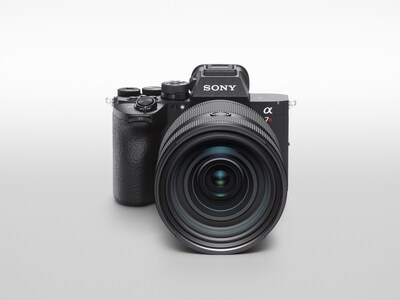
Sony's A7R VI announcement pushes the R line into a familiar but important question: can one body deliver heavy files, fast readout and credible hybrid performance without becoming the wrong camera for everyone?
The confirmed spec story is resolution plus speed: a stacked full-frame sensor, faster burst shooting, stronger readout behavior and serious video language. The editorial question is which photographers will actually bill for both halves of that promise.
For many users, an older A7R body or a lower-resolution Alpha will still be the more rational purchase. The A7R VI only makes full sense when cropping, print scale, commercial detail and moving subjects all matter in the same job.
Why the stacked sensor matters
A high-resolution camera is usually judged by detail first. The A7R VI asks a different question: what happens when the readout speed catches up to the resolution enough that the camera stops feeling specialized? Faster readout means better silent shooting, more confident tracking and fewer situations where the photographer has to choose between file size and responsiveness.
This is not only about sports. In wildlife, a bird leaving a branch does not wait for the landscape camera to be ready. In weddings, a quiet electronic shutter can matter during a ceremony. In commercial work with movement, the ability to crop later while capturing decisive motion can save a layout.
The risk is that the file pipeline becomes the hidden cost. Big RAW files, 8K video, high frame rates and long bursts make storage, card speed, editing hardware and archiving part of the buying decision.
Autofocus and battery are practical upgrades
Sony's Real-time Recognition AF+ and skeletal human pose estimation are exactly the kind of features that sound abstract until the subject turns away, crosses another person or moves unpredictably. For event and documentary photographers, better subject recognition reduces the number of frames lost to small focus hesitations.
The new NP-SA100 battery is also a bigger deal than it looks. A high-resolution hybrid body that records serious video and shoots fast stills needs endurance. The downside is system friction: a new battery format is another charger, another expense and another incompatibility for photographers already invested in Sony's older NP-FZ100 ecosystem.
Who should upgrade
Upgrade if the A7R V has been limiting you specifically in speed, rolling-shutter behavior, blackout-free action, video endurance or subject tracking under movement. Those are the problems this camera appears built to address.
Do not upgrade only because 66.8MP is a larger number. The difference between high resolution and useful resolution depends on lenses, technique, shutter speed, focus accuracy and how the images are actually delivered.
For many photographers, the older A7R V or a lower-resolution Alpha body will remain the smarter buy. The A7R VI is compelling when resolution and responsiveness are both billable needs, not just desires.
Where stacked resolution earns its keep
A high-resolution stacked body is valuable only when the photographer can use detail and speed together. Wildlife, fashion movement, commercial action, silent ceremony work and crop-heavy documentary jobs are better tests than a spec-sheet comparison.
The hidden cost is the file pipeline. Big RAW bursts and serious video make cards, storage, editing hardware, backup discipline and lens quality part of the camera purchase, not accessories to think about later.
Sources cited in this article
For "Sony Alpha 7R VI: What Stacked Resolution Actually Changes," these sources separate confirmed product information from editorial interpretation, market context, and buying-risk analysis.
- Sony Electronics: Alpha 7R VI announcement sony.mediaroom.com
Hybrid full-frame cameras
Canon, Sony, Nikon and Panasonic bodies where stills, video, autofocus, codecs, system cost and practical work collide.
- Camera Grand Prix 2026: What the Winners Say About Cameras Now Camera News
- Canon EOS R6 Mark III Analysis 2026: The Hybrid Body Canon Needed Reviews
- Nikon Z6III in 2026: The Hybrid Camera That Still Makes Sense Camera News
- Canon EOS R6 V: The Full-Frame V-Series Camera Canon Needed Camera News
- Nikon ZR Analysis 2026: RED RAW Enters the Nikon Z System Reviews