Snapseed 4.0 matters because it brings an old mobile photography question back into the present: can a free phone editor still feel serious when every camera app, social platform and AI tool wants to own the image pipeline?
After years of neglect, Snapseed has become active again. PetaPixel reported on May 11, 2026, that Snapseed 4.0 has arrived on both iOS and Android, with Android users finally getting the redesigned experience and film-inspired tools that had first returned on iOS.
The update is important because Snapseed occupies a different place from heavy desktop editors and subscription mobile suites. It is fast, free, touch-native and historically loved by photographers who want selective edits, quick tonal control, RAW support and looks without sending every picture through a social app.
The bigger story is workflow independence. Phones are now excellent cameras, but their default editing paths often push users toward platform aesthetics. A revived Snapseed gives mobile photographers a separate editing room again.
Why Android matters here
The odd part of Snapseed's recent history is that Android users had to wait while a Google-owned app moved first on iOS. That made the Android release feel less like a minor update and more like a correction.
For photographers, platform parity matters because habits form around the phone in your pocket. A good mobile editor is not only a feature list; it is the difference between making a quick selective correction on the train and postponing the file until the picture has lost urgency.
If Snapseed keeps moving, Android photographers regain a lightweight editor that can sit between capture and publishing without becoming a monthly bill.
Film looks are useful only if editing stays disciplined
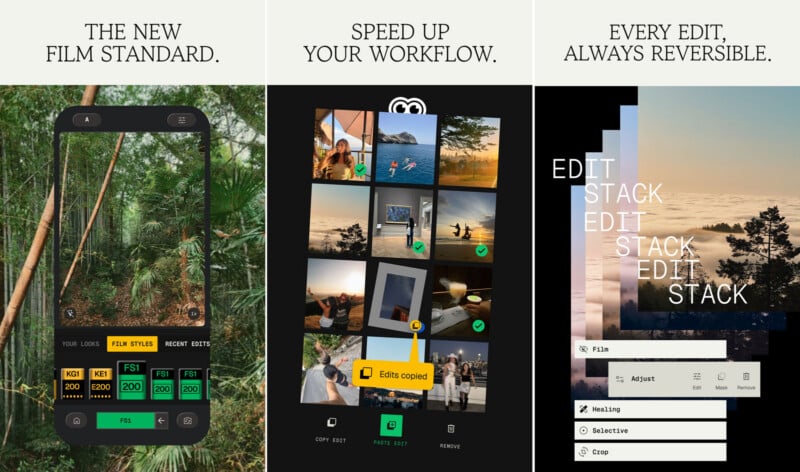
The film-inspired filters are culturally smart because the compact-camera and analog revivals have already trained many photographers to want color character from small devices. But looks can become lazy fast.
The stronger use is consistency. A travel series, family diary, street project or daily visual notebook can benefit from a repeatable tonal language. Snapseed's value is highest when the look supports editing decisions instead of replacing them.
Non-destructive edits, selective tools, masking, healing and RAW support are more important than any single preset. They let a phone image remain a photograph that can be worked, not just a file decorated before posting.
Why it still matters in 2026
Mobile photography has split into two worlds. One is automatic: capture, process, post, forget. The other is intentional: photograph, edit, sequence, keep. Snapseed belongs to the second world when used carefully.
It will not replace Lightroom, Capture One or desktop color work for demanding projects. It does not need to. Its job is to make serious mobile editing frictionless enough that more pictures receive actual attention.
That is why the update matters for a camera site. The most used camera in the world is still the phone, and the editor attached to that phone shapes how photographs look, circulate and survive.
Why a free editor still matters
Snapseed's value is not nostalgia for an old Google app. It is the existence of a fast, no-subscription editing room between phone capture and the platform feed, where selective adjustments and RAW-aware edits can happen without turning every image into content first.
The app matters most if it keeps serious controls visible without becoming heavy. Mobile photographers need speed, but they also need enough precision to protect tone, color, local contrast and the small corrections that make a phone file feel intentional.
Sources cited in this article
For "Snapseed 4.0 on Android: Google's Old Photo Editor Suddenly Matters Again," these sources separate confirmed product information from editorial interpretation, market context, and buying-risk analysis.
- PetaPixel: Snapseed 4.0 Android update petapixel.com
- Google Play: Snapseed play.google.com