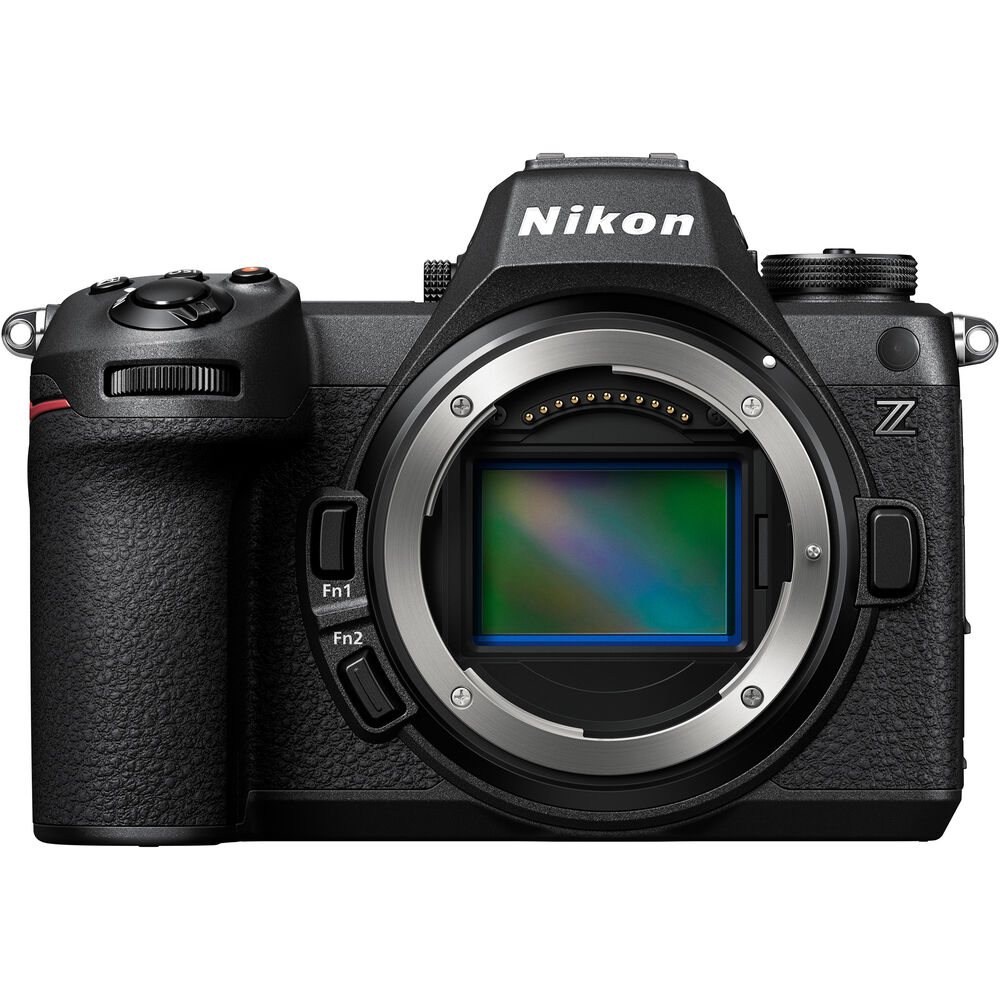
The Nikon Z6III is not just a 2025 headline anymore. In 2026 it has settled into a clearer role: a serious hybrid camera for photographers who need speed, video depth and full-frame files without jumping to a Z8 or Z9.
The original headline called the Z6III the ultimate mirrorless camera of 2025. That was too broad. The stronger 2026 claim is narrower and more useful: Nikon built one of the most balanced full-frame hybrid bodies in its class by putting a partially-stacked 24.5MP sensor and EXPEED 7 processing into the Z6 line.
That sensor is the story. Nikon says the readout is substantially faster than the Z6II generation, and the practical effect is visible in the camera's stronger electronic shutter behavior, high-speed shooting and video capability. It also gives the Z6III a distinct position between conventional enthusiast bodies and flagship stacked-sensor machines.
For still photographers, the Z6III is not about maximum resolution. It is about response, autofocus, viewfinder quality, stabilization and a file size that keeps event, documentary and editorial workflows efficient. For video users, internal RAW options and high frame-rate modes make the camera more credible than older Z6 bodies.
The real upgrade
The partial-stack design gives the Z6III its identity. It does not make the camera a full flagship, but it closes the gap enough that many working photographers can avoid paying for a larger body.
Nikon's current Z ecosystem also makes the camera easier to recommend in 2026 than the Z6II was at launch. The lenses, autofocus behavior and cloud workflow are more mature.
Who should skip it
Landscape and studio photographers who primarily need resolution may still prefer higher-megapixel bodies. Sports specialists who live at the edge of readout speed may still want a true stacked sensor.
But for the middle of professional photography, where a camera must do many things well, the Z6III remains one of Nikon's most coherent bodies.
Why this story still matters in 2026
The useful way to read this camera news story now is not as a frozen launch note. It is a marker of how quickly camera culture changes: features that looked unusual a year earlier can become expected, while small ergonomic decisions often matter longer than headline specifications.
For photographers, the lasting question behind "Nikon Z6III in 2026: The Hybrid Camera That Still Makes Sense" is practical. Does the product, rumor or technology change what someone can actually carry, focus, expose, edit, deliver or afford? If the answer is no, the story is only noise. If the answer is yes, it belongs in the archive.
What photographers should take away
The best buying and gear decisions usually come from identifying the constraint first. Some readers need autofocus confidence. Others need smaller files, better color, cheaper lenses, stronger video tools or a camera that feels less like a phone. The same announcement can be important for one photographer and irrelevant for another.
That is why this site treats specifications as evidence rather than decoration. A camera story should help the reader understand tradeoffs, not just remember numbers. The strongest conclusion is often not what is newest, but what is actually useful enough to change a working habit.
How the Archive Should Grow
The strongest version of Photography Today is not only a stream of new posts. It is an archive that becomes more useful with time: old rumors clarified, older camera reviews updated, image credits improved, and buying guides rewritten when the market changes.
That means growth is editorial as much as technical. More traffic is useful only if the site remains worth returning to: clear headlines, accurate context, real images, readable pages and a point of view that respects photographers as working, thinking people.