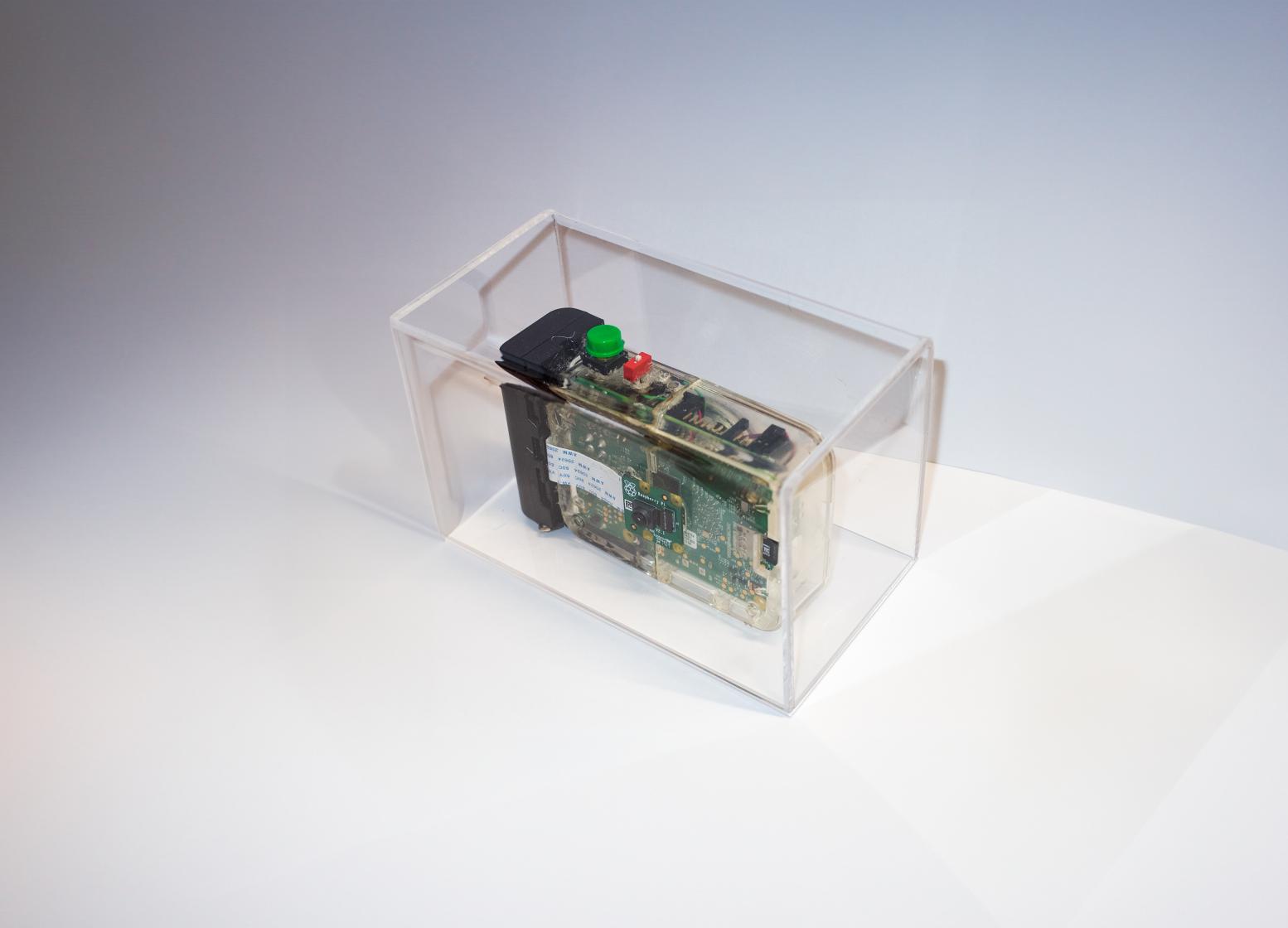
Camara Poetica is still relevant in 2026 because it refuses the simplest idea of a camera. It does not only take a photograph. It translates a scene into a poetic event and gives that text a voice.
Raspberry Pi's 2024 feature positioned Elias Sarquis's Camara Poetica as a project that predates the newer wave of AI poetry cameras. The distinction is important: Sarquis's device captures and keeps images while generating poetic text, making the output a relationship between photograph and language rather than a replacement of one by the other.
The project page describes a physical camera that captures a scene, reads it through computer vision and language systems, and then produces a poem that can be heard through an integrated speaker. That speaking object matters: the photograph becomes image, text and sound.

That makes the project stronger as photography than as gadget culture. It asks what a camera can produce after the shutter: a file, a poem, a record, a performance, an interface, a voice or a memory object. In 2026, that question sits at the center of post-photographic art.
The most serious reading is that Camara Poetica is a critique of standardized devices. Instead of accepting the phone-camera pipeline of capture, optimize, upload and scroll, it builds a personal apparatus around the artist's own sensitivity.
Why the project matters
The camera becomes an authoring system. Its hardware, code and poetic rules shape the final work as much as the lens does.
That places the project in a lineage of experimental photography where the apparatus is part of the artwork.

The 2026 lesson
AI in photography does not have to mean generic image generation. It can also mean building specific instruments with specific behaviors.
Camara Poetica is valuable because it makes the system visible and personal.

From the camera-object to the iOS app
The project now has a mobile continuation: Cámara Poética for iPhone turns photos into poems inside a focused app interface.
Read the app article to move from the original physical camera to the current iOS version.
Why the object matters
The Poetry Camera is not only an AI novelty because the physical object changes the exchange. A camera that prints language instead of producing a normal photograph forces users to confront what capture means when the image is translated rather than shown.
That makes the project useful for thinking about future cameras. AI does not have to mean generic image generation; it can also mean building specific instruments with narrow, legible behaviors.
Sources cited in this article
For "The Poetry Camera: Elias Sarquis, Raspberry Pi and a Camera That Writes," these sources ground the cultural argument in public records, archives, exhibitions, project material, or reporting.
- Elías Sarquis: Cámara Poética project page elias-sarquis.com
- Raspberry Pi: Camara Poetica feature raspberrypi.com
- Raspberry Pi Documentation: AI Camera raspberrypi.com
- Cámara Poética official site camarapoetica.com
AI, authorship and image trust
Generated video, copyright, programmable cameras, mobile image systems and the disclosure problem around synthetic images.
- AI Video and the Camera Language It Borrows Inspiration
- Theatre d'Opera Spatial and the AI Copyright Case Inspiration
- Cámara Poética iOS App in 2026: When Photos Become Poems Inspiration
- Raspberry Pi AI Camera in 2026: Why Programmable Cameras Matter Camera News
- Wearable Cameras in 2026: Photography, Privacy and the New Viewfinder Camera News