Sony has made a non-binding proposal that could turn Tamron into a wholly owned subsidiary. The proposal is real; the takeover is not yet a deal. For photographers, the question is what corporate control could eventually mean for lens choice across competing mounts.
Tamron confirmed on July 30, 2026 that it received a non-binding proposal from Sony Corporation involving transactions intended to make Tamron a wholly owned subsidiary of Sony Group Corporation. Tamron also established a special committee to review options aimed at increasing corporate value.
That wording matters. Tamron did not announce a definitive agreement, an accepted price, a timetable, a shareholder vote or a completed acquisition. It said there was nothing else requiring disclosure at the time and promised a prompt announcement if that changes.
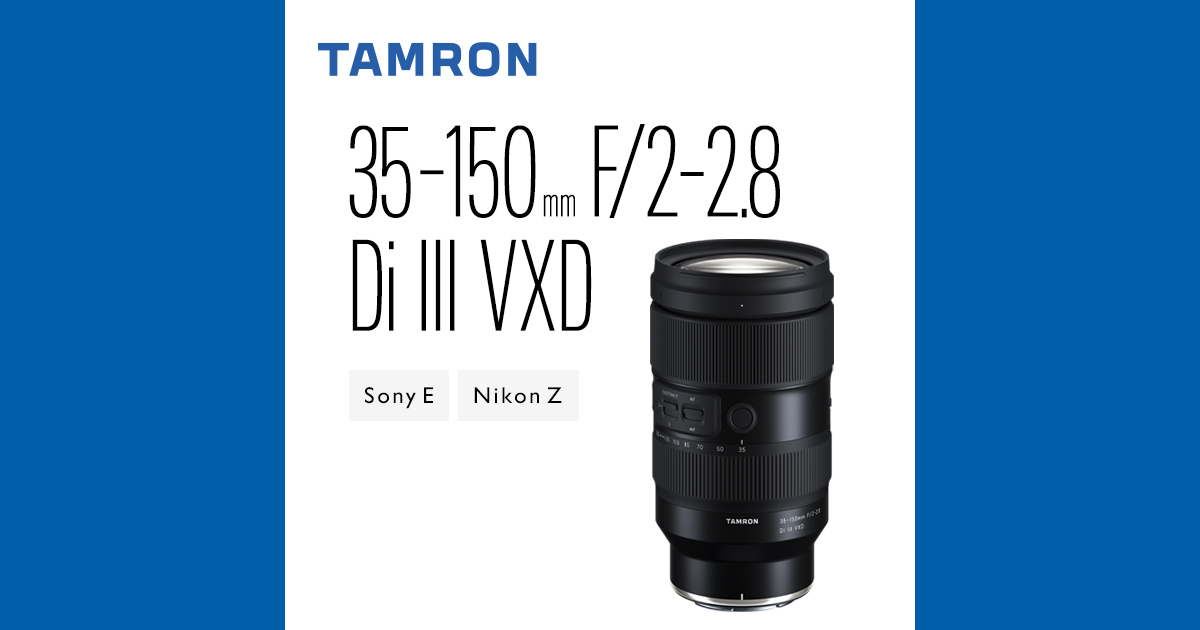
The story matters beyond two corporate logos because Tamron is part of the practical economics of mirrorless photography. Its current consumer catalog spans Sony E, Nikon Z, Fujifilm X and Canon RF, with some lenses sold across more than one system. The 35-150mm F/2-2.8 shown here, for example, is offered for both Sony E and Nikon Z.
If Sony ultimately gains full control, the useful question will not be whether Tamron can still make excellent lenses. It will be whether a Sony-owned Tamron remains a genuinely multi-mount competitor with independent pricing and product decisions. No public statement answers that question yet.
What Sony actually proposed
The primary source is unusually concise. Tamron says Sony's proposal is non-binding and concerns a series of transactions that would make Tamron a wholly owned subsidiary of Sony Group. A special committee is considering the proposal and other ways to enhance Tamron's corporate value.
A non-binding proposal is an opening position, not a signed sale. Due diligence, price, financing, board approval, shareholder treatment, regulatory review and final documentation can all stand between an approach and a completed transaction. Some proposals change shape; some disappear.
This is therefore confirmed corporate news, but it is not permission to write the future in the past tense. Sony has proposed. Tamron is reviewing. Everything beyond that needs another disclosure.
Why Tamron matters to the mirrorless market
Tamron's importance is not only optical. The company helped make modern mirrorless systems more affordable by offering zooms and primes that sit beside camera-maker lenses rather than simply imitating them. A 28-75mm F/2.8 or 35-150mm F/2-2.8 can change the total cost and shape of a working kit.
In an event job, a fast third-party zoom can be the difference between covering a season with one body and two lenses or postponing the move to a new mount. For travel and documentary work, Tamron's lighter zooms often trade a little range, aperture or construction for a kit that is easier to carry all day.
That pressure is healthy for photographers. It gives camera brands a reason to compete on price, weight and focal-length ideas. The concern around a possible acquisition is therefore not simply whether the Tamron name survives. It is whether the competitive role survives.
The Sony E-mount case
Sony users may see the least immediate disruption because Tamron already has a deep E-mount catalog and close product compatibility. From a buyer's perspective, that catalog is one of the reasons an Alpha body can be less expensive to build around than its body price suggests.
Full ownership could theoretically improve coordination around autofocus, firmware and future camera features. It could also reduce the distance between Sony's own lens strategy and Tamron's pricing or launch calendar. Both outcomes are plausible; neither has been announced.
The limitation is the important part: a Sony-owned brand is not automatically an independent competitor. If overlapping lenses become less aggressive on price or less willing to challenge Sony's own roadmap, E-mount could keep the products while losing some of the pressure that made the ecosystem attractive.
What Nikon, Canon and Fujifilm users should watch
For Nikon Z, Canon RF and Fujifilm X photographers, the central issue is continued access. Tamron's official lineup currently includes all three mounts, and several important designs are sold outside Sony E. Nothing in Tamron's July 30 statement says those products will be withdrawn.
Mount support is not only a mechanical question. Autofocus protocols, in-camera corrections, firmware updates and licensing relationships decide how confidently a third-party lens can live through several camera generations. Any future statement about those agreements will matter more than speculation about a logo change.
A wedding photographer using a Nikon-mounted 35-150mm does not need to sell it because of a proposal. The lens will not forget how to focus if Tamron's ownership changes. The longer-term questions are service, firmware and whether the next lens in the series is offered for the same mount.
Should you buy a Tamron lens now?
Buy or skip the lens on the evidence available today: optical performance, autofocus behavior, size, weather protection, warranty coverage, service in your country and the price against first-party alternatives. A non-binding corporate proposal is too uncertain to decide a current assignment kit.
If you need a lens for paid work this season, waiting for a transaction that may change, take months or fail entirely can cost more than it saves. If the purchase is optional and you are choosing a system for the next decade, it is reasonable to watch for a definitive agreement and explicit multi-mount commitments.
The honest recommendation is calm rather than complacent. Existing owners should keep shooting. Near-term buyers should evaluate the actual lens. Long-term system buyers should add ownership and mount policy to the watchlist, not turn it into a fact that does not exist.
What would turn the proposal into a real story
The next meaningful document would be a definitive agreement, tender offer or board recommendation that states price, structure and conditions. Regulatory filings could then show whether competition authorities see a problem and how long the process might take.
Photographers should look for specific commitments: whether Tamron remains a separate brand, which mounts stay active, how warranties and repair networks are handled, whether firmware support changes and who controls future product roadmaps.
Until those facts arrive, the sharpest conclusion is limited but important. Sony wants more than a supplier relationship with Tamron. Tamron is listening through a special committee. The lens market has not changed yet, but one of its most consequential ownership questions is now public.
Read the wider camera-market context
The proposal sits inside a market where lens ecosystems, not only camera bodies, decide the real cost of changing systems.
Sources cited in this article
For "Sony's Tamron Proposal: What It Means for Camera Lenses," these sources separate confirmed product information from editorial interpretation, market context, and buying-risk analysis.
- Tamron: Response to Recent Media Coverage Regarding the Company tamron.com
- Tamron: Investor relations releases for 2026 tamron.com
- Tamron: Current lens lineup by mount tamron.com
- Tamron: 35-150mm F/2-2.8 Di III VXD product page tamron.com
- Digital Camera World: Sony proposal confirmed by Tamron digitalcameraworld.com
Camera market and buying context
Retail demand, bestseller signals, APS-C systems, upgrade decisions and camera-company pressure beyond spec sheets.
- Best-Selling Cameras in 2026: What Amazon and B&H Buyers Are Really Choosing Camera News
- Camera Grand Prix 2026: What the Winners Say About Cameras Now Camera News
- Best APS-C Cameras in 2026: Practical Picks for Real Photographers Camera News
- APS-C Camera Systems in 2026: Lenses, Bodies and Real Value Camera News
- GoPro Strategic Review: Why the Action Camera Pioneer Is Looking Beyond Action Cameras Camera News